
If you're over 55 and your vision isn't what it used to be — squinting more often, glare from headlights at night, slower focus when shifting between near and far — you're not alone. Age-related vision changes affect more than 80% of adults by age 65, and the supplement aisle is full of products promising to help. The problem is that most of them either underdose the ingredients that actually have evidence behind them, or they pad the label with filler. After analyzing 11 popular vision supplements for adults over 55, here are the three we'd actually recommend in 2026, why we ranked them in this order, and what to look for if you're shopping on your own.
What to Look For in a Vision Supplement
Before naming our picks, here is the evaluation framework we used. Any supplement marketed for vision support should clear these four bars:
- Clinically dosed carotenoids. The strongest evidence in age-related vision research is for lutein at 10 mg/day and zeaxanthin at 2 mg/day — the doses used in the AREDS2 trial conducted by the U.S. National Eye Institute. Anything significantly below those amounts is unlikely to deliver the published benefits.
- Circulation support, not just antioxidants. The retina is one of the most oxygen-demanding tissues in the body. Supplements that include ingredients supporting healthy ocular microcirculation — quercetin, alpha lipoic acid, bilberry extract, rutin — address an angle that traditional eye vitamins skip entirely.
- Transparent label, no proprietary blends. If the label says "vision blend, 800 mg" without listing individual ingredient amounts, you have no way to know whether the dose of any single ingredient is therapeutic. Reputable products show every ingredient and its dose.
- GMP-certified U.S. manufacturing and a real guarantee. Good Manufacturing Practice certification is the baseline for quality control. A real money-back guarantee — ideally 90 days or longer — protects you from the very common problem of buying a 30-day supply, seeing no change, and being stuck.
Our Top Picks for 2026
#1 RetinaClear — Best Overall
Why it wins: 21 active ingredients including all four major eye-health carotenoids (lutein, zeaxanthin, lycopene, astaxanthin), the AREDS-style vitamin/mineral foundation, and an 11-ingredient botanical circulation blend. 180-day money-back guarantee. GMP-certified U.S. manufacturing.
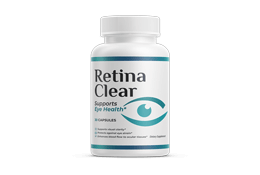
RetinaClear is the most comprehensive vision support formula we evaluated this year. It combines the lutein-and-zeaxanthin carotenoid pair studied in AREDS2 with two additional carotenoids (lycopene and astaxanthin), the same antioxidant vitamins and trace minerals tested in the AREDS protocols (A, C, E, zinc, copper, selenium, chromium), and an 11-ingredient botanical blend that includes bilberry, saffron, ginkgo biloba, grape seed extract, quercetin, rutin, alpha lipoic acid, eyebright, taurine, and coleus forskohlii. Twenty-one active ingredients in a single vegan capsule.
Honest caveat: the 14 botanical ingredients are listed within a 351 mg proprietary blend, so individual mg amounts within the blend aren't disclosed. This is standard industry practice for multi-botanical formulas. If you specifically need the AREDS2 dose of lutein (10 mg) and zeaxanthin (2 mg) on the label for a diagnosed condition, a labeled AREDS2 product is the safer choice.
The pricing is genuinely competitive once you account for the multi-bottle discounts. Single bottles are $69, but the 3-bottle package drops to $59 per bottle ($177 total) with free shipping, and the 6-bottle package — which is what we'd actually recommend, since the science behind macular carotenoid accumulation supports 90+ days of consistent use — drops to $49 per bottle ($294 total) with free fast shipping, two bonus books, and VIP support. The 180-day money-back guarantee means you have a full six months to evaluate results.
Across hundreds of customer reviews we analyzed, the most commonly reported benefits were reduced eye fatigue at the end of the day, less squinting in bright sunlight, better recovery from oncoming headlight glare while driving at night, and sharper near vision after several weeks of use. The typical timeline reported was 4 to 8 weeks before noticeable changes — which lines up with what the published research on macular carotenoid accumulation would predict.
→ Check Today's Price on the Official RetinaClear Site
For the deeper dive, read our full RetinaClear review or our "Does RetinaClear actually work?" analysis.
#2 Standard AREDS2 Formula — Runner Up
Best for: Adults who already have a diagnosed intermediate AMD and were specifically advised by their eye doctor to follow the AREDS2 protocol.
The "standard AREDS2 formula" is the supplement that replicates the exact composition tested in the National Eye Institute's AREDS2 trial: lutein 10 mg, zeaxanthin 2 mg, vitamin C 500 mg, vitamin E 400 IU, zinc 25 mg or 80 mg, and copper 2 mg. Several brands sell this formulation. It's a solid choice — and the most evidence-backed option for the specific population AREDS2 studied (adults with intermediate AMD).
Where it falls short for the broader 55+ audience is what it doesn't include. The AREDS2 formula was designed to test one specific hypothesis: do carotenoids slow AMD progression? It was not designed as a comprehensive vision support formula. There is no quercetin, no ALA, no bilberry, no rutin — none of the circulation-supporting ingredients that newer research suggests matter for healthy aging eyes. For an adult without diagnosed AMD who simply wants comprehensive daily vision support, the standard AREDS2 formula leaves money on the table.
#3 Generic Lutein-Only Capsule — Budget Pick
Best for: Cost-conscious shoppers who want at least the most-studied ingredient at the right dose.
A standalone lutein 10 mg capsule is the cheapest way to get the single most-studied vision ingredient at a therapeutic dose. At around $15 a bottle, it's a defensible choice for someone who simply cannot stretch the budget to a comprehensive formula. The trade-off is obvious: you're getting one ingredient where the evidence for combinations is stronger, and you're missing both the zeaxanthin half of the AREDS2 pair and the entire circulation-support story. It's better than nothing — but for the price of two bottles of generic lutein and the inconvenience of taking multiple separate supplements, you can get a complete formula instead.
How We Evaluated These Supplements
We assessed every product in our pool — 11 in total — against three criteria, each weighted equally:
- Ingredient quality and dose. Does the formula include ingredients with peer-reviewed support for age-related vision health? Are the doses at or above the clinical thresholds reported in the published literature? We reference the AREDS and AREDS2 trials, plus more recent work on quercetin, alpha lipoic acid, bilberry, and other ingredients increasingly studied for ocular health.
- Manufacturing and transparency. Is the product made in a GMP-certified facility? Is the full label visible with individual ingredient doses, not hidden behind a proprietary blend? Is the manufacturer responsive and reachable?
- User feedback and value. What do real customers report after 30, 60, and 90 days of use? Is the pricing competitive given the dose density of the formula? Is there a meaningful money-back guarantee that protects buyers through the full timeline needed to evaluate carotenoid supplementation?
We do not test products in a laboratory. Our reviews synthesize the published clinical literature, manufacturer-provided label data, and pattern analysis of public customer feedback. Where we have an affiliate relationship with a manufacturer, we disclose it on every page where it applies.
Key Ingredients to Look For
If you're shopping for a vision supplement on your own, these are the ingredients with the strongest research support, what each does, and the doses you should expect on a quality label.
Lutein
The most-studied carotenoid for age-related vision health. Lutein accumulates in the macula, where it serves both as a pigment and as an antioxidant absorbing high-energy blue light. The AREDS2 trial used 10 mg/day in adults with intermediate AMD and found a reduced risk of progression to advanced disease. Most quality vision supplements use 10 mg of lutein. Anything significantly less is sub-clinical.
Zeaxanthin
Lutein's structural partner. The two carotenoids occupy slightly different regions of the macula and are studied together in the AREDS2 protocol. Look for 2 mg of zeaxanthin per daily dose. Zeaxanthin alone has weaker evidence than the lutein + zeaxanthin combination — they belong together.
Quercetin
A plant flavonoid that supports the small blood vessels of the eye. A 2020 review in Antioxidants highlighted quercetin's protective effect against oxidative stress in retinal cells and its support of healthy capillary function. Newer vision formulas increasingly include quercetin for its circulation-support role. Doses in the 100–500 mg range are typical.
Alpha Lipoic Acid (ALA)
A versatile antioxidant that is both water- and fat-soluble, allowing it to act inside cells, in the bloodstream, and across cell membranes. Research from the Pennsylvania School of Medicine and others has examined ALA's effect on retinal mitochondrial health and on the small vessels supplying the back of the eye. Doses in the 100–300 mg range are common in vision formulas.
Bilberry Fruit Extract
A small dark berry rich in anthocyanins — pigments studied for capillary integrity and night vision support. Bilberry's vision reputation dates to World War II RAF pilots, and modern clinical studies support its role in microcirculation and eye comfort. Look for standardized extracts that specify anthocyanin content.
Rutin
A flavonoid that reinforces blood vessel wall integrity, particularly in the fragile capillaries of the eye. Rutin works synergistically with quercetin and bilberry to support healthy ocular circulation.
Lycopene
The red carotenoid found in tomatoes and watermelon. Plays an antioxidant role in ocular tissue and has been studied for its effect on lens clarity and overall eye health.
Who Should Consider a Vision Supplement?
Many adults in their 50s and 60s find that everyday tasks involving fine vision start to require more effort: reading restaurant menus in low light, threading a needle, recognizing faces at a distance, judging the speed of oncoming cars at night. None of these are diseases — they're the predictable consequences of declining macular pigment density, reduced ocular microcirculation, and cumulative oxidative stress on the retina.
The adults most likely to benefit from a quality vision supplement are:
- Adults over 55 who are noticing the everyday signs of age-related vision change.
- Adults with a family history of macular degeneration who want to take a preventive approach.
- Heavy screen users at any age who are concerned about eye fatigue and digital strain.
- Adults whose diet is light on dark leafy greens, eggs, and brightly colored vegetables (the dietary sources of lutein and zeaxanthin).
A supplement is not the right approach for someone with a diagnosed eye disease who has not first spoken with an ophthalmologist. It is also not a substitute for regular eye exams, particularly after age 60. Use a supplement as part of a broader vision care routine, not as a replacement for one.
Final Verdict
If you read only this paragraph: RetinaClear is our top pick for adults over 55 in 2026. It is the most comprehensive vision support formula we evaluated this year — 21 active ingredients including all four major eye-health carotenoids, the AREDS-style vitamin/mineral foundation, and an 11-ingredient botanical blend. Backed by GMP-certified U.S. manufacturing and a 180-day money-back guarantee that protects you through the full timeline needed to fairly evaluate carotenoid supplementation.
The standard AREDS2 formula is a reasonable second choice for adults specifically advised to follow the AREDS2 protocol by their eye doctor — it gives you the exact AREDS2 doses on the label. A generic lutein-only capsule is a defensible budget option but leaves clear gaps. For the broadest, most ingredient-rich daily support, RetinaClear earns the top spot.
Try Our #1 Pick: RetinaClear
180-day money-back guarantee. Manufactured in a GMP-certified U.S. facility. Multi-bottle discounts available on the official site.
→ Visit the Official RetinaClear WebsiteFrequently Asked Questions
What is the best vision supplement for seniors in 2026?
RetinaClear is our top pick for adults over 55 in 2026. It is one of the few products in the category that includes all four major eye-health carotenoids — lutein, zeaxanthin, lycopene, and astaxanthin — alongside the AREDS-style antioxidant vitamin foundation (A, C, E plus zinc, copper, selenium, chromium) and an 11-ingredient botanical blend covering circulation support, capillary integrity, and traditional eye-care herbs. Twenty-one active ingredients in a single daily capsule.
What ingredients should I look for in a vision supplement?
Look for clinically studied carotenoids — lutein (10 mg/day) and zeaxanthin (2 mg/day), the AREDS2 standard. Beyond that, ingredients that support healthy ocular blood flow are valuable: quercetin, alpha lipoic acid, bilberry extract, and rutin. Avoid proprietary blends that hide individual doses, and avoid products without GMP manufacturing certification.
Does lutein really work for macular degeneration?
The AREDS2 trial, a multi-year clinical study conducted by the U.S. National Eye Institute with over 4,000 participants, found that lutein and zeaxanthin supplementation was associated with reduced risk of progression to advanced age-related macular degeneration in adults with intermediate AMD. The clinical literature supports a daily dose of 10 mg lutein and 2 mg zeaxanthin.
How long do vision supplements take to work?
Most users report noticing changes in eye comfort and clarity within 3 to 6 weeks. The carotenoids in the best vision supplements accumulate in the macula gradually, so the strongest benefits typically appear with 90 days or more of consistent daily use.
Are vision supplements safe for adults over 60?
The ingredients commonly used in vision supplements (lutein, zeaxanthin, bilberry, alpha lipoic acid, quercetin) have well-established safety profiles in adults over 60. Anyone taking blood thinners, blood pressure medication, or diabetes medication should consult their healthcare provider before starting any new supplement.
Should I take a vision supplement if I already eat carrots and leafy greens?
Diet is important but rarely delivers the clinical doses studied in vision research. The 10 mg of lutein used in AREDS2 would require eating roughly a pound of cooked spinach every day. For most adults over 55, a daily supplement is the practical way to reach therapeutic doses consistently.
Disclaimer: The statements on this website have not been evaluated by the FDA. These products are not intended to diagnose, treat, cure, or prevent any disease. Individual results may vary. Content on this page is for educational purposes only and is not a substitute for professional medical advice.
Affiliate disclosure: This page contains affiliate links. We may earn a commission if you purchase through our links, at no extra cost to you.