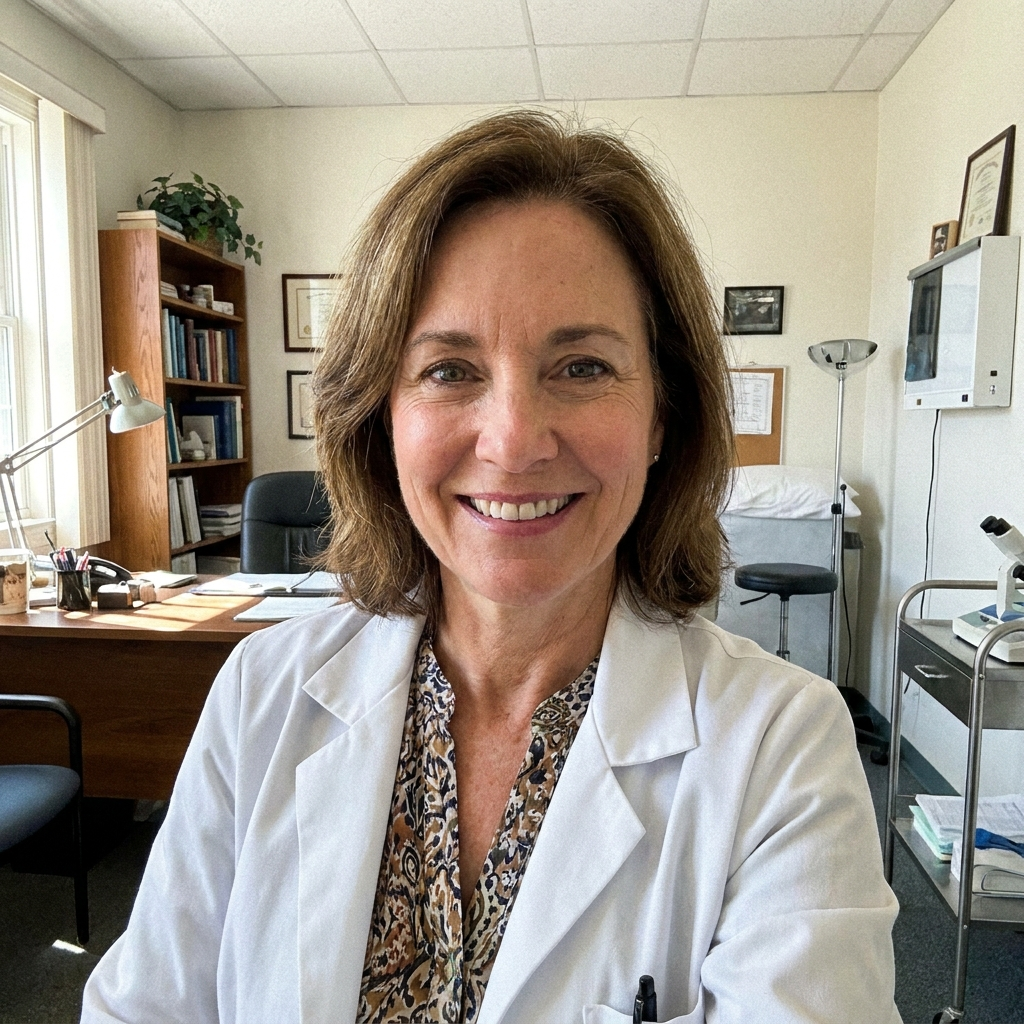
Quick answer: Normal age-related vision changes after 50 include presbyopia (loss of near focus), slower dark adaptation, increased glare sensitivity, slightly reduced color vibrancy, and dry eye. These develop gradually over years. NOT normal: sudden vision changes, vision loss in one eye, flashes of light, new floaters, central-vision distortion, or a curtain across your field — these need same-day medical attention. Below, what to expect in each decade and how to age your eyes well.
Normal aging vs. medical concern — the dividing line
Most vision change in your 50s, 60s, and 70s is gradual, symmetric (both eyes), and predictable. That's normal aging. The brain compensates for a lot of it, which is why some people are surprised at their eye exam to learn how much has changed.
What's normal:
- Slow progression over months and years, not days or weeks
- Both eyes affected roughly equally
- Manageable with glasses, lighting changes, and lifestyle adjustments
- No pain, no flashes, no floaters, no curtain effects
NEVER normal — always see an eye doctor the same day:
- Sudden vision loss in one or both eyes
- Vision change affecting only one eye
- Flashes of light in your peripheral vision
- A sudden shower of new floaters
- A "curtain" or "shadow" descending across your visual field
- Eye pain, especially with vision change
- Straight lines suddenly looking wavy
- A new blind spot in your central vision
- Vision changes with severe headache or one-sided weakness (call 911)
Your 50s: presbyopia and the start of dry eye
What's changing
The defining change of your 50s is presbyopia — the gradual stiffening of the eye's lens that makes near focus increasingly difficult. It started in your 40s; by your mid-50s, it's universal. Most people get their first pair of reading glasses (or bifocals) somewhere between 42 and 50. By 55, almost everyone uses some form of near-vision correction.
Dry eye also begins to emerge, especially in women going through menopause. The tear film becomes less stable. End-of-day eye tiredness, intermittent blur that briefly clears with blinking, and morning grittiness become common.
Most people don't have cataracts yet — but the lens is starting to yellow slightly, which subtly reduces color vibrancy and increases glare. Subtle enough that most people don't notice it.
What to do
- Get a current refraction. Reading glasses, progressives, or contacts — whatever fits your lifestyle.
- If you're a woman in or past menopause, start preservative-free artificial tears 2–3× daily even before symptoms get bad. Prevention is easier than treatment.
- Build the daily habits now: UV-blocking sunglasses, dark leafy greens, no smoking, blood pressure control. These pay off in your 70s and 80s.
- Get a comprehensive dilated eye exam at least every 2–4 years. More often if you have diabetes, hypertension, or family history of eye disease.
Your 60s: cataracts, glare, and the start of macular pigment decline
What's changing
The 60s is when measurable changes start to add up. The lens is yellowing more obviously, which is the early cataract process — even before a cataract is "ripe" enough to think about surgery, the lens changes are scattering light and increasing glare. Night driving becomes harder. Headlights look like flashbulbs. Recovery from glare slows.
The pupil shrinks further, admitting less light to the retina. Reading requires brighter light. Restaurants feel darker than they used to.
Macular pigment density (the protective yellow pigment of lutein and zeaxanthin in the center of the retina) declines. This affects contrast sensitivity — telling apart subtle gradations of gray or distinguishing detail in low light. Many subtle "is my vision getting worse?" complaints in the 60s trace back to this.
About 10–15% of adults in their 60s develop some early signs of age-related macular degeneration (AMD) — most very mild and only detectable on a thorough eye exam.
What to do
- Comprehensive dilated eye exam every 1–3 years (annually if any conditions are emerging).
- OCT imaging on request — it's the gold standard for catching early retinal changes.
- Add daily lutein/zeaxanthin to your diet via spinach, kale, eggs, or a vision supplement.
- If glare is bothering you, ask for anti-reflective coating on your glasses. Big difference.
- Don't push the night driving. Reaction times have slowed; light tolerance has decreased. Plan around it.
- This is where a daily vision supplement starts to earn its place — see "supplements" below.
Your 70s and beyond: cataract surgery, AMD monitoring, and active management
What's changing
By 70, the majority of adults have visually significant cataracts. About 50% of adults have had cataract surgery by 80, and the surgery has a near-universal success rate.
AMD prevalence rises — about 1 in 4 adults over 75 has some degree of AMD, though most are early or intermediate stages. The risk of glaucoma also rises in this decade.
For adults who managed their vision well in their 50s and 60s — got the exams, didn't smoke, ate the leafy greens, took the supplements, controlled their blood pressure — the 70s and 80s can still be a high-functioning decade for vision. For adults who didn't, this is when the consequences land.
What to do
- Comprehensive dilated eye exam at least annually — non-negotiable.
- Discuss cataract surgery proactively when your visual function starts to degrade — don't wait until you're losing independence.
- If diagnosed with intermediate AMD, the AREDS2 protocol is specifically indicated. Talk to your ophthalmologist.
- Do the Amsler grid test weekly. We cover it on our macular degeneration signs page.
- Lighting matters more than ever. Bright, even ambient light plus focused task lighting.
- Continue the daily vision supplement — at this age, the supporting role for macular pigment and antioxidant defense matters more, not less.
Always-urgent symptoms — at any age
Worth repeating because it matters so much. These are eye-doctor-or-ER-today symptoms:
- Sudden vision loss in one or both eyes
- Vision change affecting one eye only
- Flashes of light in peripheral vision (possible retinal detachment)
- Sudden shower of new floaters (possible retinal detachment)
- A curtain or shadow descending across the visual field
- Straight lines suddenly looking wavy (possible wet AMD)
- New blind spot in central vision
- Eye pain with redness or vision change
- Vision change with severe headache, slurred speech, or facial drooping (call 911 — possible stroke)
How to slow age-related vision changes
You can't stop aging. But the trajectory of your eye health is meaningfully modifiable. Five things have real evidence:
1. Don't smoke (or stop)
Single biggest modifiable risk factor for cataracts and AMD progression. Smokers have 2–4× the AMD risk of non-smokers. Quitting at any age helps going forward.
2. Daily UV protection
UV-A and UV-B blocking sunglasses, year-round, including cloudy days. Cumulative damage over decades is the issue, not single-day exposure.
3. Cardiovascular health
Blood pressure, cholesterol, and blood sugar control all protect the small retinal vessels. The eye is downstream of cardiovascular health.
4. Eat for your eyes
Dark leafy greens (lutein, zeaxanthin). Fatty fish (omega-3s for tear film and retinal health). Eggs (highly bioavailable lutein/zeaxanthin). Colorful vegetables (broader antioxidant intake). This isn't optional — it's the dietary foundation.
5. Daily vision supplement starting in your 60s
For most adults, dietary lutein and zeaxanthin intake is well below the AREDS2 clinical dose. A daily supplement closes the gap. The strongest evidence is for the AREDS2 carotenoid pair plus the AREDS vitamin/mineral foundation. Newer comprehensive formulas add astaxanthin (eye fatigue, visual accommodation), bilberry (microcirculation, glare recovery), saffron (retinal function), and alpha lipoic acid (antioxidant defense).
Our top pick for adults over 55 in 2026 is RetinaClear, which combines all four major eye-health carotenoids with the AREDS vitamin/mineral foundation and a botanical blend covering circulation and antioxidant defense. See our full comparison for methodology and the runner-up options.
Important: if you've been diagnosed with intermediate AMD, your ophthalmologist may recommend the specific AREDS2 formula at the exact clinical doses. That's a personalized medical recommendation — broader vision-support formulas like RetinaClear are appropriate for general healthy-aging support, not as a replacement for an AREDS2 prescription.
Watch the Free RetinaClear Presentation
30 minutes covering the research behind age-related vision changes, the AREDS2 carotenoids, and the comprehensive formula. No email required.
→ Watch the Free VideoFrequently Asked Questions
What vision changes are normal after 50?
Normal changes include presbyopia (near-focus loss starting 40-45), slower dark adaptation, increased glare sensitivity, slightly reduced color vibrancy, and dry eye especially in women after menopause. All develop gradually over years. Sudden changes, one-eye changes, flashes, new floaters, distorted central vision, or a curtain across the field are NOT normal — same-day medical attention.
When should I get an eye exam?
Every 2-4 years for adults 40-54; every 1-3 years for 55-64; every 1-2 years for 65+. More frequently if you have diabetes, hypertension, family history of eye disease, or any new symptoms. The exam should include dilation, eye pressure measurement, and retinal imaging.
Can age-related vision changes be slowed?
Yes, meaningfully. Quitting smoking reduces cataract and AMD progression. Daily UV protection slows lifetime damage. Cardiovascular health protects retinal vessels. Dark leafy greens and a vision supplement support macular pigment density. Regular exams catch treatable conditions early. None of this reverses aging, but it shifts the trajectory measurably.
What's the best vision supplement for adults over 50?
The strongest evidence is for the AREDS2 carotenoids (lutein and zeaxanthin) with the AREDS vitamin/mineral foundation. Newer formulations also include astaxanthin, bilberry, saffron, and alpha lipoic acid. Our top pick for 2026 is RetinaClear — comprehensive coverage, GMP-certified U.S. manufacturing, 180-day money-back guarantee.
Should I worry about cataracts?
Most adults develop some cataract changes by their 60s and 70s. Cataract surgery is one of the safest, most successful surgeries in medicine — 15 minutes per eye, outpatient, near-universal success rate. The decision is usually about when, not whether. Have annual exams so your ophthalmologist can monitor progression.
Medical disclaimer: This content is for educational purposes only and is not a substitute for professional medical advice. If you have vision changes — gradual or sudden — see an eye doctor. Statements about supplements have not been evaluated by the FDA.
Affiliate disclosure: This page may contain affiliate links. We may earn a commission if you purchase through our links, at no extra cost to you.